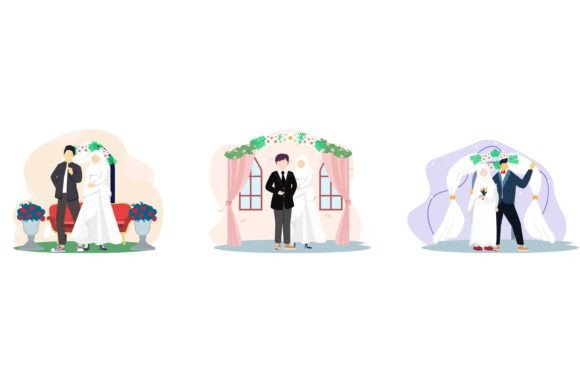
Embracing Tradition with Modern Elegance in Wedding Design
Planning a wedding celebration that honors Islamic traditions often involves finding a delicate balance between timeless elegance and contemporary style. You want visuals that feel respectful and authentic, yet fresh and visually striking enough to stand out in a crowded market. This is where a thoughtfully crafted design asset, like a Wedding Islamic Flat Design, becomes invaluable. It’s not just about pretty patterns; it’s about creating a cohesive visual language that tells a story, connects with your audience on a cultural level, and elevates your project from good to truly memorable. Whether you’re a designer crafting a suite of invitations or a small business owner branding a new halal catering service, the right visual elements form the foundation of your message.
The Visual Language of Flat Design in Islamic Contexts
Flat design, characterized by its clean lines, bold colors, and absence of three-dimensional effects like shadows or gradients, brings a modern clarity to Islamic art motifs. Traditional Islamic patterns are inherently geometric and intricate, making them a perfect candidate for this minimalist approach. When you translate arabesques, tessellations, or delicate floral motifs into flat vector graphics, you achieve something powerful: the patterns become more versatile, scalable, and easier to integrate into modern layouts without looking dated or overly ornate. A well-executed Wedding Islamic Flat Design vector pack captures the spiritual symbolism and beauty of these patterns while presenting them in a way that feels accessible and relevant for today’s digital and print mediums.
Consider the practical impact. A flat design mandala or geometric border doesn’t compete with your typography or main message. Instead, it frames it. It adds a layer of cultural context and sophistication without visual clutter. This is crucial for applications like logo design, where clarity at small sizes is non-negotiable, or for social media graphics, where you have mere seconds to capture attention. The clean aesthetic ensures your content remains readable and professional, whether it’s viewed on a phone screen or printed on a wedding program.
From Brand Identity to Tangible Keepsakes: Practical Applications
The true value of a comprehensive design asset lies in its flexibility. A quality set of Wedding Islamic flat design elements is a toolkit for a wide array of projects. For branding and brand identity, these vectors can be the cornerstone. Imagine a luxury halal cosmetics line using a subtle, flat-patterned icon set on its packaging. Or a wedding planner building a website and stationery suite around a cohesive set of geometric motifs. The consistency this provides is unmatched, reinforcing brand recognition with every touchpoint.
Beyond branding, the applications are wonderfully diverse:
- Invitations & Stationery: Create elegant save-the-dates, invitations, and thank-you cards that set the tone for the entire event.
- Event Decor: Design table numbers, menu cards, seating charts, and signage that carry the visual theme through the physical space.
- Merchandise: Apply patterns to favors like small boxes, pouches, or even custom-designed prayer mats for guests.
- Digital Presence: Enhance websites, blogs, and editorial layouts with decorative borders, headers, or background textures that add depth without distraction.
- Marketing Assets: Develop cohesive packaging design, posters, and digital ads for businesses in the wedding industry, from venues to caterers to dress designers.
Because these are vector files, you have complete control. Need to change a gold accent to a deep emerald to match a client’s color scheme? Done. Want to scale a pattern to fit a large banner without losing a single pixel of clarity? Simple. This level of editability is what separates a professional-grade asset from a basic clipart collection.
Making Smart Choices for Your Creative Workflow
Integrating a new set of design assets into your workflow should feel empowering, not complicated. Here’s how to approach it practically. First, consider the personality of the project. Is the wedding you’re designing for modern and minimalist, or classic and opulent? The flat design style inherently leans modern, but the specific motifs—whether they are sharp geometric stars or softer floral arabesques—will dictate the final feel. Choose elements that align with the story you want to tell.
Next, think about font pairing. This is where many projects succeed or fail visually. A bold, geometric sans serif font can create a striking, contemporary contrast with intricate Islamic patterns. Alternatively, a refined serif font can evoke a sense of classic elegance. If the design calls for a personal touch, a delicate script font for names or headings can work beautifully, but ensure it remains legible. Always test your chosen typography with the graphic elements. Does the text remain clear and easy to read when placed over a patterned background? Readability is paramount, especially for important details like dates, times, and locations.
Finally, review the technical specifications of the asset pack. The mention of RGB Color Mode is key for digital projects, ensuring colors display vibrantly on screens. For print, you may need to convert to CMYK, which is easily done in Adobe Illustrator. The promise of well-organized shapes in the file is a huge time-saver, allowing you to quickly isolate and edit specific parts of a complex pattern. And never underestimate the value of a high-resolution sample preview. It lets you assess quality and detail before you commit, ensuring the asset meets your standards for a professional presentation.
Ultimately, the goal is to find design assets that feel like a natural extension of your creative process. A well-curated set of premium font alternatives and graphic elements, like a versatile Wedding Islamic Flat Design collection, doesn’t just decorate a project—it helps build a cohesive, engaging, and respectful visual experience that resonates deeply with its intended audience. It’s about making thoughtful choices that honor tradition while embracing the clarity and efficiency of modern design tools.